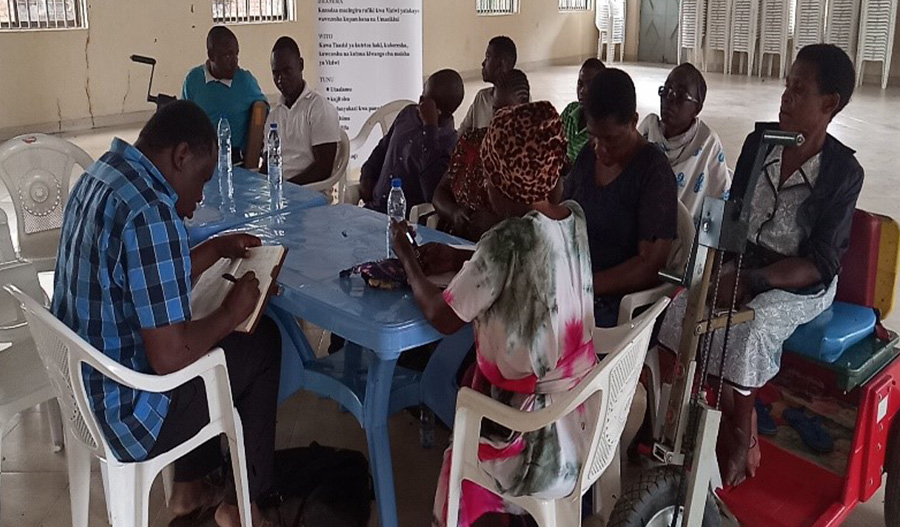
While UMIVITA serves the Deaf person countrywide it also works on Cross disability. Disability is diverse, dynamic, and personal. A Cross-Disability Program is designed to welcome, support, and advocate for people of all disability types, ensuring that no one is left behind due to the specific nature of their condition or diagnosis.
WHO WE SERVE:
Our cross-disability initiatives are fully inclusive and open to individuals living with:
- Physical & Mobility Disabilities: Conditions affecting movement, balance, or dexterity.
- Sensory Disabilities: Vision loss, blindness, hearing loss, or deafness.
- Intellectual & Developmental Disabilities: Conditions affecting learning, communication, or adaptive behavior (e.g., Autism, Down Syndrome).
- Mental Health & Psychosocial Conditions: Ongoing mental health conditions that impact daily life activities.
- Cognitive & Neurological Disabilities: Traumatic brain injuries, dementia, or executive functioning challenges.
- Invisible & Chronic Illnesses: Non-apparent conditions, chronic pain, or systemic illnesses.
CORE PRINCIPLES OF A CROSS-DISABILITY MODEL:
- Shared Rights & Advocacy: While access needs vary, the fundamental rights—accessibility, dignity, equal opportunity, and self-determination—are universal.
- Peer Support & Community: Bringing together people with diverse lived experiences fosters broader solidarity, reduces isolation, and builds stronger community advocacy.
- Universal Design: Programs and environments are structured from the ground up to be physically, digitally, and instructionally accessible to everyone.
- Intersectionality: Recognizing that disability intersects with age, gender, economic status, and background, requiring flexible, human-centered support.
Why This Approach Matters
Traditionally, many support systems have been siloed, requiring individuals to fit into narrow diagnostic categories to receive services. A cross-disability model breaks down these barriers. It allows organizations to address systemic barriers—such as inaccessible public infrastructure, discriminatory policies, and social stigma—that impact the entire disability community.